Lord Ganesh Ji-All You Need To Know
Lord Ganesh Ji-All You Need To Know
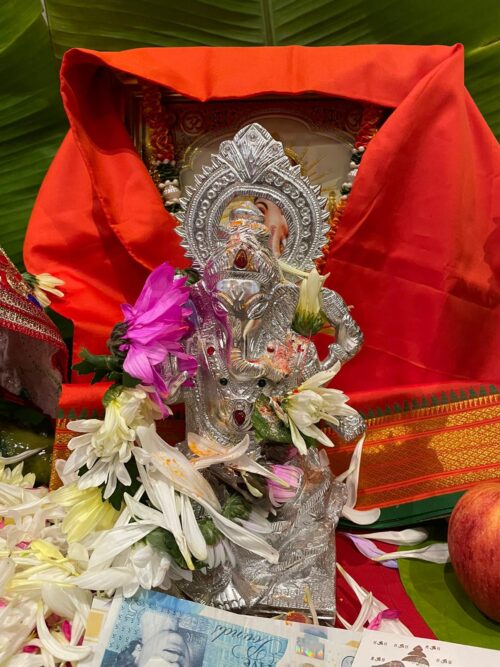
Lord Ganesha, the divine deity with an elephantine countenance, a curved trunk, large ears, and a pot-bellied human body, is revered as one of the most pious and powerful gods in Hinduism. Worshipped by Shaivites, Vaishnavites, Buddhists, and Jains alike, Ganesha is believed to be the beloved son of Lord Shiva and Goddess Parvati.
Various Names of Ganesha
Ganesha is known by various names, including Ganpati, Gajananaa, Vighnaharta, Vinayaka, and Ekdanta. He is widely recognized as the deity of success and wealth, as well as the remover of obstacles and evils, earning the title of Vighnaharta.
Importance in Auspicious Events
In Hinduism, all auspicious events begin with a prayer to Shri Ganesha. Devotees believe that invoking this patron deity’s blessings ensures the successful completion of any endeavor. Whether it’s a wedding, the inauguration of a new house, or the start of a business, the presence of Ganpati is considered highly favorable.
Panchayatana Puja and Global Worship
Ganesha is one of the five prime Hindu deities—alongside Brahma, Vishnu, Shiva, and Durga—celebrated in the Panchayatana Puja. His worship transcends geographic boundaries, with devotees from different countries participating with full dedication and devotion.
Ganesha Chaturthi Celebrations
The birthday of this elephant-headed god, known as Ganesha Chaturthi, is celebrated with great fervor each year. This grand festival sees widespread celebrations, showcasing the deep devotion and reverence for Lord Ganesha across the globe.
The Legend of Lord Ganesha as Chintamani
Lord Ganesha is known by many names, each with its own unique legend. One such name is Chintamani. Here’s the captivating legend behind this title:
King Abhijit’s Son, Gana
King Abhijit had a notorious son named Gana, who took pleasure in tormenting innocent people. One day, Gana ventured into the Kadambvan forests for a hunt. Sage Kapilmuni, who resided in these forests, graciously invited Gana and his soldiers to share a meal.
The Magical Chintamani Jewel
Impressed by the sage’s hospitality and the extraordinary feast, Gana inquired about the secret behind such delectable food and the ability to produce it so quickly. Kapilmuni revealed the story of Chintamani, a magical jewel given to him by Lord Indra that could fulfill any wish.
Gana’s Demand and Seizure
Fascinated by the Chintamani’s powers, Gana demanded the jewel from Kapilmuni. When the sage refused, Gana seized the jewel by force. Heartbroken, Kapilmuni sought help from Lord Vishnu.
Lord Ganesha’s Intervention
Lord Vishnu advised Kapilmuni to seek assistance from Lord Ganesha. Upon hearing the sage’s plight, Ganesha confronted Gana in a fierce battle. Ultimately, Gana was killed, and Ganesha retrieved the Chintamani.
Ganesha as Chintamani
Ganesha returned the Chintamani to Kapilmuni. In gratitude, the sage tied the jewel around Ganesha’s neck and declared that from that moment on, Ganesha would be known as Chintamani.
The Humbling of Kuber: A Lesson in Humility
Kuber, the god of wealth, is renowned for his legendary status and immense riches. However, with his wealth, his pride and ego grew, particularly in his role as the treasurer of the gods. To flaunt his affluence, Kuber decided to host an extravagant feast, inviting all the gods. As a devoted follower of Lord Shiva, he planned to have Shiva as his first guest.
The Invitation to Lord Ganesha
However, Shiva declined the invitation. Upon Kuber’s persistent requests, Shiva asked Lord Ganesha to attend in his place. Ganesha accepted the invitation. On the day of the feast, Kuber proudly told him he could eat as much as he wished.
Ganesha’s Lesson in Humility
Ganesha, aiming to teach Kuber a lesson in humility, began eating voraciously. All the food was consumed, yet his hunger remained insatiable. He demanded more. Kuber, now helpless and out of food, feared that Ganesha might even swallow him out of hunger.
Seeking Help from Lord Shiva
Desperate, Kuber ran to Lord Shiva for help. Upon arrival, he found Ganesha already there. Realizing the gravity of his arrogance, Kuber sought forgiveness for his egoistic behavior and learned a valuable lesson in humility.
The Story of Durva and Lord Ganesha
Once upon a time, a devil named Analasur terrorized the people on Earth. To deal with Analasur, all the gods approached Lord Ganesha for help. Analasur attempted to kill Ganesha, but Ganesha swallowed Analasur instead. This led to a tremendous burning sensation in Ganesha’s stomach, which he could not bear.
The Gods’ Attempt to Help
The gods tried their best to relieve Ganesha’s burning sensation, but they failed. Then, a sage arrived and offered a bundle of 21 durvas (a type of grass) to Ganesha. This relieved his burning sensation immediately.
Durva’s Significance in Poojas
Since that day, the durva leaf has been dear to Ganesha and is offered to him during poojas.
Wise Ganesha: The Story of Wisdom and Devotion
Once upon a time, Lord Ganesha and his brother Kartikay were arguing about who was the older sibling. Seeking an answer, they went to Lord Shiva. He told them to travel around the Earth, stating that whoever returned first would be the older child. Both brothers agreed to this challenge.
The Challenge Begins
Kartikay mounted his vehicle, the peacock, and flew off immediately. However, Ganesha stayed where he was and walked around his parents instead. Both Shiva and Goddess Parvati were confused and asked Ganesha for an explanation.
Ganesha’s Wise Explanation
Ganesha explained, “Parents symbolize the Earth, and my parents mean the world to me. That’s why I walked around you.” Impressed by Ganesha’s wise comment, Parvati and Shiva recognized him as the older and wiser brother.
The Legend of Elephant-Headed Lord Ganesha
There is a popular legend behind the existence of the elephant-headed Lord Ganesha. Lord Ganesha is the son of Lord Shiva and Parvati. He was assigned the duty of guarding while his mother bathed. Once, while guarding, Ganesha unknowingly prevented Shiva from entering and defending his mother’s bath.
Lord Shiva’s Anger
Lord Shiva, bursting with anger at Ganesha’s perceived foolishness, beheaded him. After learning the full story, Parvati strongly persuaded Lord Shiva to revive her son. Conveyed by his beloved, Shiva promised to use the head of the first creature he encountered to transplant for Ganesha.
The Elephant’s Head
Finally, an elephant, the wisest of all animals, appeared and became the involuntary donor for Ganesha. This act resulted in the first successful head transplant in history, leading to the creation of the elephant-headed and human-bodied deity, Lord Ganesha.
Divine Symbolism of Lord Ganesha
Significance of Lord Ganesha’s Whole Being
The significance of Lord Ganesha’s whole being encompasses various symbolic elements, each representing profound spiritual meanings.
Ganesha’s Head
Ganesha’s head symbolizes the Atman, or the soul, the ultimate reality of human existence.
Human Body
His human body signifies Maya, the earthly existence and the illusion that surrounds human beings.
Large Forehead
A large forehead denotes great intelligence, emphasizing wisdom and knowledge.
Long Trunk
The long trunk represents high efficiency and adaptability, signifying Ganesha’s ability to overcome obstacles.
Large Ears
Large ears imply listening to devotees, indicating Ganesha’s attentiveness to prayers and pleas.
One Tusk
One tusk retains the good and throws away the bad, symbolizing the importance of wisdom and discernment.
Large Stomach
A large stomach represents his great capacity to digest all the good and bad in life, signifying acceptance and contentment.
Short Legs
Short legs symbolize tolerance power, highlighting endurance and patience.
Small Eyes
Small eyes imply high concentration power, reflecting focus and attention to detail.
Mouse as Vehicle
The mouse as his vehicle represents control over desires, symbolizing humility and modesty.
Snake Around Waist
A snake around his waist represents energy in all forms, signifying vitality and cosmic energy.
Four Arms
Ganesha’s four arms hold symbolic items:
- Ankush: Symbolizes control over the mind.
- Ladu: Represents happiness.
- Pash (axe): Cuts off all bonds of attachment.
- Ashirvad Mudra: Blessings for the well-being of humanity.
Ganesha Mool Mantra
Om Gum Ganapatayei Namaha
ऊँ गं गणपतये नमः।।
Meaning
The mantra “Om Gum Ganapatayei Namaha” translates to “The devotee bows and offers salutations to the Lord of the World.” It is a profound expression of reverence towards Lord Ganesha, acknowledging him as the supreme deity.
Significance
This powerful mantra is believed to remove all evil and obstacles that may hinder one’s progress toward achieving goals. As the mool mantra of Lord Ganesha—also known as Ganapathi, Vinayaka, and Vigneshwar—it is said to possess the ability to eliminate negative forces and blockages. The mantra was first mentioned in the Ganapati Atharvasirsha, a sacred text attributed to Atharva Rishi, who composed it after having a divine vision of Ganapati.
Method of Chanting
To effectively chant this mantra, recite it 108 times daily using a rosary of Rudraksha beads. It is recommended to chant the Ganesha mantra before performing any Puja for other deities. Ensure you wear clean clothes while chanting and consider the auspicious occasions of Ganesh Chaturthi and Diwali for optimal results. During the chanting, offering laddus to Lord Ganesha is a traditional practice that enhances the ritual.
Ganesha Mantra
Vakratunda Mahakaaya Suryakoti Samaprabhaa
Nirvighnam Kurume Deva Sarvakaaryeshu Sarvadaa
This mantra praises Lord Ganesha, whose curved trunk (Vakratunda) and massive body (Mahakaaya) shine like a million suns (Suryakoti). It seeks his blessings to remove all obstacles (Nirvighnam) from all activities (Sarvakaaryeshu) and endeavors, always (Sarvadaa). The mantra expresses deep devotion and requests Lord Ganesha’s continuous protection and support.
108 Names of Lord Ganesha
Names and Attributes of Lord Ganesha
Lord Ganesha, a prominent deity in Hinduism, is celebrated by a myriad of names, each reflecting his unique qualities and divine attributes. Below is a comprehensive list of his names and their significances:
1. Akhurath
- One who has Mouse as His Charioteer
2. Alampata
- Ever Eternal Lord
3. Amit
- Incomparable Lord
4. Anantachidrupamayam
- Infinite and Consciousness Personified
5. Avaneesh
- Lord of the Whole World
6. Avighna
- Remover of Obstacles
7. Balaganapati
- Beloved and Lovable Child
8. Bhalchandra
- Moon-Crested Lord
9. Bheema
- Huge and Gigantic
10. Bhupati
- Lord of the Gods
11. Bhuvanpati
- God of the Gods
12. Buddhinath
- God of Wisdom
13. Buddhipriya
- Knowledge Bestower
14. Buddhividhata
- God of Knowledge
15. Chaturbhuj
- One who has Four Arms
16. Devadeva
- Lord of All Lords
17. Devantakanashakarin
- Destroyer of Evils and Asuras
18. Devavrata
- One who Accepts All Penances
19. Devendrashika
- Protector of All Gods
20. Dharmik
- One who Gives Charity
21. Dhoomravarna
- Smoke-Hued Lord
22. Durja
- Invincible Lord
23. Dvaimatura
- One who has Two Mothers
24. Ekaakshara
- He of the Single Syllable
25. Ekadanta
- Single-Tusked Lord
26. Ekadrishta
- Single-Tusked Lord
27. Eshanputra
- Lord Shiva’s Son
28. Gadadhara
- One who has The Mace as His Weapon
29. Gajakarna
- One who has Eyes like an Elephant
30. Gajanana
- Elephant-Faced Lord
31. Gajananeti
- Elephant-Faced Lord
32. Gajavakra
- Trunk of The Elephant
33. Gajavaktra
- One who has Mouth like an Elephant
34. Ganadhakshya
- Lord of All Ganas
35. Ganadhyakshina
- Leader of All The Celestial Bodies
36. Ganapati
- Lord of All Ganas
37. Gaurisuta
- The Son of Gauri (Parvati)
38. Gunina
- One who is The Master of All Virtues
39. Haridra
- One who is Golden Colored
40. Heramba
- Mother’s Beloved Son
41. Kapila
- Yellowish-Brown Colored
42. Kaveesha
- Master of Poets
43. Kriti
- Lord of Music
44. Kripalu
- Merciful Lord
45. Krishapingaksha
- Yellowish-Brown Eyed
46. Kshamakaram
- Place of Forgiveness
47. Kshipra
- One who is Easy to Appease
48. Lambakarna
- Large-Eared Lord
49. Lambodara
- The Huge Bellied Lord
50. Mahabala
- Enormously Strong Lord
51. Mahaganapati
- Omnipotent and Supreme Lord
52. Maheshwaram
- Lord of The Universe
53. Mangalamurti
- All Auspicious Lord
54. Manomay
- Winner of Hearts
55. Mrityuanjaya
- Conqueror of Death
56. Mundakarama
- Abode of Happiness
57. Muktidaya
- Bestower of Eternal Bliss
58. Musikvahana
- One who has Mouse as Charioteer
59. Nadapratithishta
- One who Appreciates and Loves Music
60. Namasthetu
- Vanquisher of All Evils, Vices, and Sins
61. Nandana
- Lord Shiva’s Son
62. Nideeshwaram
- Giver of Wealth and Treasures
63. Omkara
- One who has the Form of OM
64. Pitambara
- One who has Yellow-Colored Body
65. Pramoda
- Lord of All Abodes
66. Prathameshwara
- First Among All
67. Purush
- The Omnipotent Personality
68. Rakta
- One who has Red-Colored Body
69. Rudrapriya
- Beloved of Lord Shiva
70. Sarvadevatman
- Acceptor of All Celestial Offerings
71. Sarvasiddhanta
- Bestower of Skills and Wisdom
72. Sarvatman
- Protector of The Universe
73. Hambhavi
- The Son of Parvati
74. Shashivarnam
- One who has a Moon-like Complexion
75. Shoorpakarna
- Large-Eared Lord
76. Shuban
- All Auspicious Lord
77. Shubhagunakanan
- One who is The Master of All Virtues
78. Shweta
- One who is as Pure as the White Color
79. Siddhidhata
- Bestower of Success and Accomplishments
80. Siddhipriya
- Bestower of Wishes and Boons
81. Siddhivinayaka
- Bestower of Success
82. Skandapurvaja
- Elder Brother of Skanda (Lord Kartikeya)
83. Sumukha
- Auspicious Face
84. Sureshwaram
- Lord of All Lords
85. Swaroop
- Lover of Beauty
86. Tarun
- Ageless
87. Uddanda
- Nemesis of Evils and Vices
88. Umaputra
- The Son of Goddess Uma (Parvati)
89. Vakratunda
- Curved Trunk Lord
90. Varaganapati
- Bestower of Boons
91. Varaprada
- Granter of Wishes and Boons
92. Varadavinayaka
- Bestower of Success
93. Veeraganapati
- Heroic Lord
94. Vidyavaridhi
- God of Wisdom
95. Vighnahara
- Remover of Obstacles
96. Vignaharta
- Demolisher of Obstacles
97. Vighnaraja
- Lord of All Hindrances
98. Vighnarajendra
- Lord of All Obstacles
99. Vighnavinashanaya
- Destroyer of All Obstacles and Impediments
100. Vigneshwara
- Lord of All Obstacles
101. Vikat
- Huge and Gigantic
102. Vinayaka
- Lord of All
103. Vishwamukha
- Master of The Universe
104. Vishwaraja
- King of the World
105. Yagnakaya
- Acceptor of All Sacred and Sacrificial Offerings
106. Yashaskaram
- Bestower of Fame and Fortune
107. Yashvasin
- Beloved and Ever Popular Lord
108. Yogadhipa
- The Lord of Meditation
This comprehensive list highlights the multifaceted nature of Lord Ganesha, showcasing his various aspects and divine attributes. Each name serves as a reflection of his unique qualities and his significance in Hindu worship and mythology.
Ganesha Stuti: Powerful Mantras and Their Significance
Ganesha mantras, known for their profound spiritual significance, are revered as siddhi mantras. Each mantra embodies specific powers of Lord Ganesha, and when chanted with proper pranayama (rhythmic breathing) and sincere devotion, they are believed to yield beneficial results. Below are some key Ganesha mantras and their meanings:
1. Om Vigneshvaraye Namaha
May all tasks be completed without any unwarranted delays or obstacles.
2. Om Sumukhaye Namaha
May endeavors be full of beauty and grace, or visual appeal.
3. Om Ekdantaye Namaha
May our focus be singular and unwavering until the task is accomplished.
4. Om Rajanathaye Namaha
May we develop a large heart and gain the ability to perceive subtleties.
5. Om Rajkaranaye Namaha
Grant us the powers of self-actualization.
6. Om Lambodaraye Namaha
Bestow upon us the power to remain focused and dedicated until the task is completed.
7. Om Dhumraketuvaye Namaha
May we achieve fame through clarity of thought.
8. Om Bhalchandraye Namaha
Inspire us to have lofty thoughts and ideals while maintaining humility and self-respect.
9. Om Vikataye Namaha
Bless us with potent energies to overcome negativity and triumph over adversaries.
10. Om Vinakaye Namaha
Endow us with leadership qualities.
11. Om Gananakshaye Namaha
Guide us to lead those who are leaders themselves.